Flat-pack kitchens have become the default choice for a huge number of London homeowners, and it’s easy to see why. Brands like IKEA and DIY Kitchens sell well-designed units at a fraction of the price of a bespoke fitted kitchen, and the range of finishes on offer rivals anything you’d find in a showroom. What buyers often underestimate is the installation side of things. A flat-pack kitchen is only as good as the fitting behind it, and there are a handful of practical realities worth knowing before delivery day arrives.
The units themselves are rarely the problem. Both IKEA and DIY Kitchens produce carcasses that are well engineered and consistent from box to box. Where kitchens go wrong is almost always in how they’re put together: the sequencing, the levelling, the small tolerances that decide whether doors close evenly or drawers stick after a few months of use. None of that is obvious when you’re browsing a showroom or a website, which is exactly why it catches so many buyers out.
1. The Cabinets Are Only Part of the Job
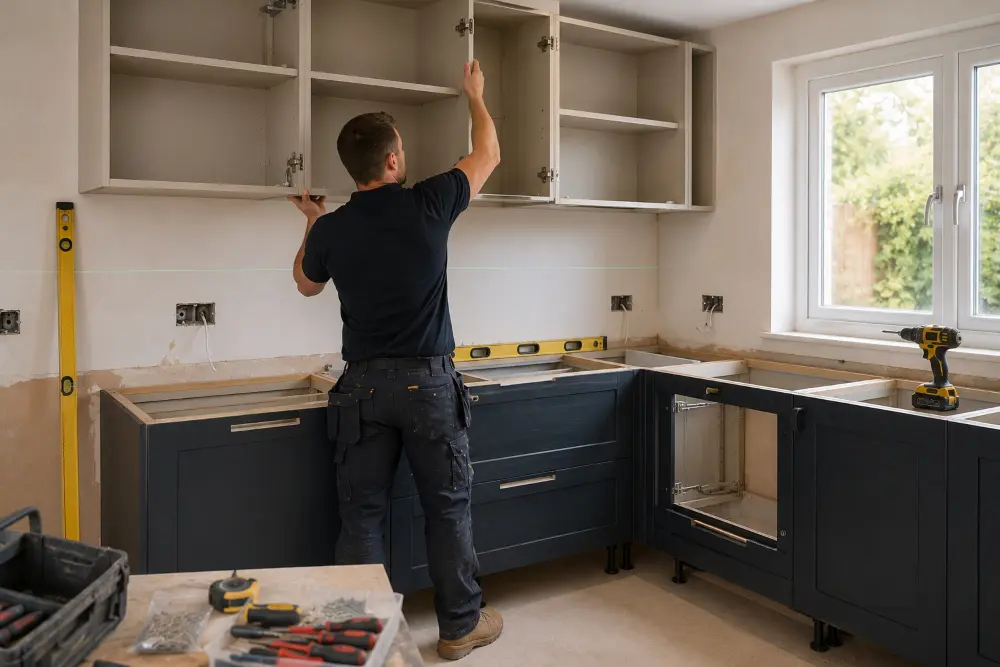
Buying the units is the easy part. Getting them level, square and properly fixed to walls and floors that are rarely perfectly straight, especially in older London properties, is where the real skill lies. A cabinet that’s out by a few millimetres at the start of a run throws off every door and drawer that follows it, and the further along the run you get, the harder that error is to correct without starting again.
2. Wall Preparation Comes First
Uneven plaster, old tiling, or damaged sections behind an existing kitchen all need addressing before a single cabinet goes up. Skipping this step is one of the most common reasons a flat-pack installation ends up looking uneven once it’s finished. It’s also the stage most likely to get rushed by anyone working to a tight deadline, which is precisely when problems get built into the wall rather than solved.
3. Delivery Checks Matter More Than You’d Think
Flat-pack orders arrive in dozens of boxes, and it’s not unusual for a panel or a set of fittings to be missing or damaged. Checking everything against the plan on delivery day, rather than discovering a gap mid-installation, saves days of delay further down the line. Both IKEA and DIY Kitchens will replace faulty or missing components free of charge, but only once the fault has been reported, and only after the replacement has made its way through their own delivery schedule.
4. Sequencing Is Not Optional
Base units, wall units, worktops and appliances need to go in a specific order for everything to line up. Plumbing and electrics have to be roughed in before cabinets are fixed, not worked around afterwards. Get the sequence wrong and you end up unpicking finished work to fix something that should have been done earlier, which almost always costs more time than doing it properly the first time.
5. Gas and Electrical Work Needs Proper Sign-Off
Any gas hob connection has to be carried out by a Gas Safe registered engineer, and electrical work in a kitchen falls under Part P building regulations. This isn’t a corner worth cutting for a lower quote, since it affects both safety and any future sale of the property. Buyers checking a solicitor’s paperwork years later will want to see that this work was certified, not just completed.
6. IKEA Kitchens Bring Their Own Quirks
The METOD system, used across IKEA’s kitchen range, is designed for precision. Wall drilling has to be exact, cabinet sequencing matters, and tolerances are tighter than most people expect from flat-pack furniture. It’s a big part of why dedicated IKEA kitchen installers exist as a distinct trade rather than a task for a general handyman. IKEA’s own installation service is subcontracted to a network of independent fitters, and lead times of four to eight weeks from purchase are common, with the fitter assigned by IKEA’s booking system rather than chosen by the customer.
7. DIY Kitchens Units Are Solid, But Still Need Levelling
DIY Kitchens has built a strong reputation for well-made carcasses at competitive prices, and thousands of homes across the UK now have one. What the brand doesn’t provide is a local installation network or a showroom to fall back on if something goes wrong, since it operates as an online-only supplier. The carcasses arrive dependable, but they still need levelling, correct sequencing, and careful attention on finishes like handleless or in-frame ranges, where gap consistency around each door is what separates a professional result from an amateur one. Painted shaker and slab doors are just as unforgiving in a different way, since any misalignment in the hinges shows up clearly against a flat, painted surface.
8. Budget for the Full Scope, Not Just the Units
Labour for a typical flat-pack installation in London runs from around £2,000 to £5,500, depending on kitchen size, appliance count and how much first-fix work is needed. That figure covers cabinet fitting, worktops, plumbing and finishing, and it’s worth getting a fixed quote rather than an estimate that grows once work starts. Old kitchen removal and disposal is often assumed to be included and isn’t always, so it’s worth confirming upfront rather than finding out on the day the skip doesn’t turn up.
9. A Realistic Timeline Beats an Optimistic One
Most flat-pack installations, whether IKEA or DIY Kitchens installation projects, take three to five days for a standard kitchen, stretching to around a week where there’s an island unit or extensive first-fix work involved. Agreeing this in advance, rather than assuming a weekend job, avoids the frustration of a half-finished kitchen dragging on far longer than expected.
A flat-pack kitchen can look every bit as sharp as a bespoke one once it’s properly fitted, but that result depends far more on the installation than most buyers assume when they’re comparing prices online. Getting the sequencing, wall preparation and finishing right is what makes the difference between a kitchen that looks flat-pack and one that doesn’t, and it’s usually a smaller gap in cost than people expect once the full scope of a proper installation is factored in from the start.