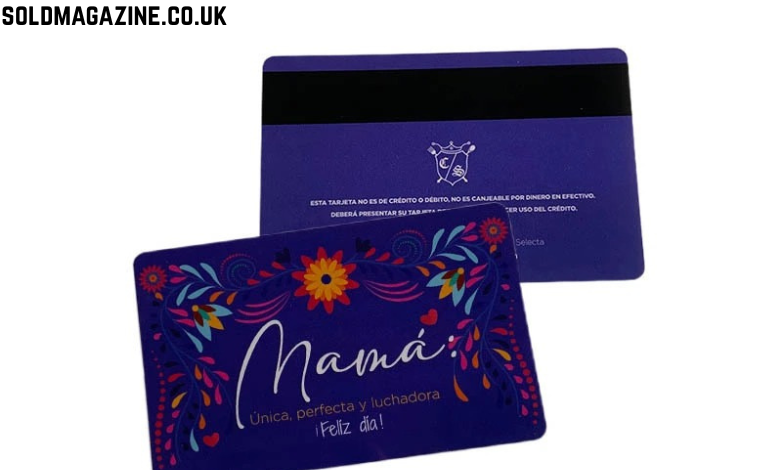
PVC membership cards can feel more practical for quick check-ins than scanning membership tickets on mobile phones. Membership cards can survive all types of flexible, irritating trauma, and are less likely to break than mobile phones can. Membership cards remain conveniently embedded in wallets and even faster to access than any phone. This is the primary reason PVC is used for membership card and why they are becoming a lot more scarce.
Real Life Scenarios for Membership Cards
Plastic membership cards that are ID-1 are specced for all the trauma cards must survive. Cards must be flexible and capable of being scanned. Programs, on the whole, seem to go to ID-1 design cards. This is because cards integrate perfectly with the systems payment card systems.
ID-1 cards are 85.60 × 53.98 mm with a nominal thickness of 0.76 mm. ID-1 are very likely to be interchangeable in any card system.
Standards of card design is far more important than people give it credit for. If a card is designed too thick or too thin, customer solutions break down quickly.
Why PVC Became the Default PVC Card Material
Because of its balanced flexibility, durability, and cost, PVC (polyvinyl chloride) found its niche in the industry. Rigid PVC cards avoid bending, resist daily scrapes, and withstand the basic abuse wallets and keyrings dish out. Also, cards that are made out of plastic will keep printing legible longer than paper cards.
Membership programs are successful when they cut down on card reprints. When a card is more durable, the program saves on card replacement, counter frustration, and member complaints.
What’s Inside a PVC Membership Card
A PVC card is made out of more than “just plastic.” It is constructed with a printed core and additional layers, often a clear overlay or laminate that adds scratch resistance and, for cards that are handled frequently, especially, helps to prevent fading.
How Finishes Affect Look and Wear
Finishes also improve quality. Glossy finishes are more vibrant but show scratches more than matte. Matte finishes, especially for gyms and retail qualify programs where cards are frequently pulled out, feel more premium and hide wear better.
How Membership Cards Carry Information
Printed Information, Barcodes, and QR Codes
For most programs, the most basic option is printed membership information, combined with a barcode or QR, linked to the member’s ID. This is inexpensive, can be produced and replaced quickly, and is simple to implement.
The major disadvantage is that scanning such codes highly relies on the quality of the print and the surface coating, so a protective overlay and thoughtful design should be considered.
Magnetic Stripe Technology
Magnetic strips are still the most widely used option for swipe readers, even though it is considered to be an outdated technology. In practice, low-coercivity and high-coercivity strips have different environments where they work best.
Low-coercivity strips are better for short-term use while high-coercivity strips are better for everyday environments where the card might be used repeatedly. With low-coercivity strips, the card can easily become unusable because the strip can become demagnetized, while high-coercivity strips can resist demagnetization and last longer.
NFC and Contactless Technology
Membership cards that use NFC technology are becoming more widely used. This is due to the fact that users prefer tapping the card instead of swiping the card.
Membership cards that use NFC technology are designed to integrate with the most widely used NFC technology, and mostly work at short distances between 3 and 5 centimeters at a radio frequency of 13.56 MHz. Tapping the card instead of swiping does wear the cards down, but that is not the only advantage of using NFC technology. It also provides a better experience in busy environments and can be used with more advanced systems that require scanning or checking the card for access.
Options Other Than PVC and Their Benefits
Given its compatibility, stable printing, and card feel, PVC is still the most practical for consistent use in any program. It is especially useful in extensive rollouts and in diverse environments where some sites do scanning or swiping and others do visual inspections.
The negative aspects of PVC arise most clearly in the contexts of end-of-life issues and when the program has strict sustainability requirements. PVC is more challenging to recycle than many plastics, and its recycling issues stem from the chemistry and additives used to manufacture the card.
When recycling is placed at the forefront, it is also common for card materials to reuse the collection streams of recycling or even to use commonplace household recycling and not the structured collection.
Because of this, some programs today use PVC containing recycled materials for better sourcing. Others use PVC free materials, such as recycled PETG in some of their card programs. These decisions are made based on the emphasis of current practices, such as readings, issuances, placards, and disposals.
How to Make a PVC Membership Card Feel Premium Without Making It Fragile
One aspect of premiumness is design and finishing wins. Things to look out for in a card design include clean typography, smart spacing, and durable finishing. These often matter more than visual overwhelming design clutter.
If the card will be used daily, prioritize its scannability, and include surfaces that conceal wear, these will include wear contrasting member IDs and scannability.
Security optimize the risk involved. Retail loyalty programs, for example, do not need the same level of security as a controlled-access facility. Programs do benefit, however, from the inclusion of unique number and over lay prints whose protective attributes preserve the print for longer, lessening the transparency of a card.
Closing Summary: PVC Still Fits the Day-to-Day Job
The unglamorous problems attributed to PVC card is the reason they are still popular among most membership programs. PVC cards provide consistent and reliable card printing and membership cards that are compatible with every type of scanner and reader.
Standards like ID-1 sizing are also used to help producers predict card systems for easy integration at a large size.
The everyday use of PVC cards, even with their unsustainability and poor recycling, will always make them the baseline for the programs. Textures, smart data carriers, and better materials will always help to add more adaptive features.
FAQ
Oftentimes, the questions below come to mind regarding PVC cards and their functionality.
What is the standard measurement for a PVC card?
A PVC card is most commonly CR80 sized, also identified by the ID-1 standard, which is a common measurement for card manufacturers, sizing to 85.60 × 53.98 mm, containing a thickness of 0.76 mm.
Are PVC cards compatible with barcode scanners and magstripe readers?
Of course! PVC is a widely accepted material for printing barcodes and QR codes, and the magstripe cards are compliant with the standard that most readers accept.
What is preferable for a membership program, HiCo or LoCo magnetic stripe?
Usually, LoCo magnetic stripes suffice for a tin membership program, however, HiCo are less easily erased, and in combination with the membership cards, are more likely to withstand scanning and straying magnetic bands.
Are PVC membership cards with NFC technology possible?
Certainly. NFC cards are among the most contactless technology membership cards, and are programmed to operate at 13.56 MHz and are designed for short-range, quick, tap access.
Are PVC membership cards recyclable?
Card programs generally avoid complex recycling processes, which is often the case with PVC cards because of their additives and chemical compounds, and most membership cards opt for standard recycling processes designed to collect cards