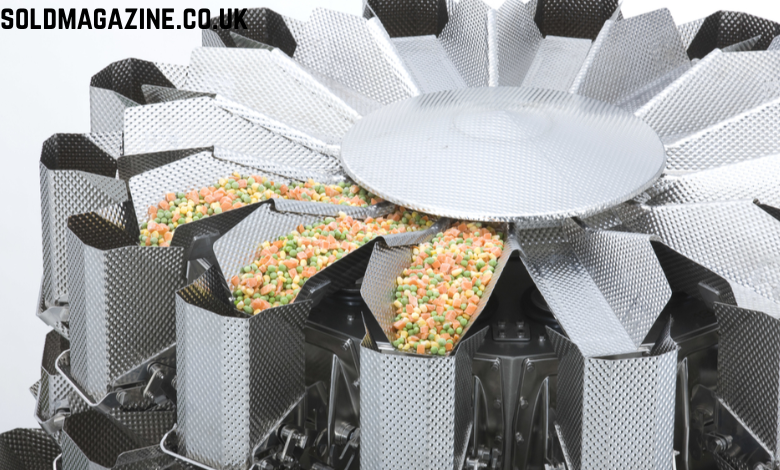
A multi head weigher splits product into many small hoppers, weighs each portion with load cells, then the controller picks the best combination to hit your target weight within tolerance. The chosen hoppers open together into a timing hopper and feed the packer. Result: high speed with very low giveaway.
What is a multihead weigher?
A multihead weigher (computer combination weigher) is an automatic weighing system that combines the contents of several weigh hoppers to reach a precise target weight at speed. Typical systems run dozens to hundreds of weighments per minute with gram-level accuracy, which is why they are standard on modern food packing lines.
FESS Group supports process and control automation, end-of-line packaging and inspection systems, so we can plan, install and integrate multihead weighers in live factory environments.
The main components at a glance
- Top cone and feeder pans — distribute bulk product evenly to each lane.
- Pool hoppers and weigh hoppers — pool hoppers keep each lane topped up; load-cell weigh hoppers measure each portion.
- Combination controller — runs the algorithm that selects the best set of hoppers whose total meets the target.
- Timing hopper and discharge chutes — collect the chosen portions in one shot and release them to the packaging machine at the right moment.
How a multihead weigher works — step by step
- Infeed and distribution
Product enters the top cone, then vibratory pans spread it into multiple lanes. - Pre-staging
Pool hoppers keep each lane ready so weigh hoppers can refill instantly after every cycle. - Simultaneous weighing
Each weigh hopper records a live weight via its load cell. The controller now has many possible combinations to choose from on every cycle. - Combination selection
The controller calculates which set of hoppers totals closest to the target, inside your tolerance. The chosen hoppers open together. - Discharge and pack transfer
Product drops to a timing hopper, then into a VFFS tube, a pre-made pouch filler, or a distribution system for trays.
Why multihead weighers are accurate and fast
- Lots of combinations per cycle — more heads mean more sums to choose from, so totals land close to target and giveaway falls.
- Continuous refilling — pool hoppers keep weigh hoppers ready, so the machine does not starve lanes.
- Tight timing with the packer — the timing hopper synchronises with seal jaws or pouch stations. Top models quote 200+ weighments per minute with gram-level accuracy.
What can you run on a multihead?
- Free-flowing snacks and confectionery.
- Fresh produce and salads.
- Sticky or fragile items with special feeders, coatings or contact parts.
- Blends — assign different heads to different ingredients and hit a combined target per pack.
Set-up tips that make the difference
- Tune product flow — adjust vibration, gate timing and pool levels so every head gets consistent feed.
- Pick the right target and tolerances — tight enough to protect giveaway, loose enough to maintain throughput. Here’s the gist: set your mean a touch above legal weight, then trim as your process stabilises.
- Use the timing hopper well — correct delays reduce starved jaws and back-ups.
- Design hygienically — smooth parts and fast strip-down reduce allergen and micro risk during changeovers.
- Plan changeovers — save product presets; colour-code contact parts to speed swaps.
Where a multihead weigher sits in the line
A typical snack or produce line runs: infeed conveyor → multihead weigher → timing hopper → VFFS or tray line → checkweigher → metal detector → case packing. Pairings with distribution systems, tray denesters, checkweighers and detectors are common. FESS can integrate the multihead weigher machine with end-of-line equipment and inspection systems as a single, accountable project.
FESS can integrate the weigher with end-of-line equipment and inspection systems as a single, accountable project.
Troubleshooting quick wins
- Underweights or rising rejects — re-balance feed rates; clean any build-up on pans; check for load-cell drift.
- Bridging or sticking — change contact surface finish or angle; add product conditioning where allowed.
- Starved packer — retune timing hopper delays and verify the packer handshake.
- Excess giveaway — review target-weight strategy and combination rules; optimise set-points by product.
FAQ
What is the difference between pool and weigh hoppers?
Pool hoppers stage product for the next cycle. Weigh hoppers sit on load cells and provide the weight data for the combination calculation.
Can a multihead weigher feed both bags and trays?
Yes. The timing hopper can drop to a VFFS bagmaker or to a distribution system that places portions into trays.
How fast can a multihead run?
Top-tier models quote 200+ weighments per minute with gram-level accuracy. Real-world speed depends on product flow and the packer.