In modern electronics, very few failures are caused by complex algorithms or exotic components.
Instead, many reliability issues begin with something far more fundamental: power definition.
Before a PCB is assembled, tested, or shipped, engineers must clearly communicate how power is generated, distributed, and referenced. This communication starts with the DC voltage symbol in the schematic and continues through layout, manufacturing, and assembly. At the same time, understanding SMT meaning—how surface mount technology physically realizes a design—is essential to ensure that the original power intent survives mass production.
This article provides a complete, engineering-focused explanation of DC voltage symbols and SMT meaning, and shows how they are tightly connected in real-world PCB design and manufacturing.
What Is a DC Voltage Symbol?
The DC voltage symbol represents a direct current (DC) power source in an electronic schematic. Unlike alternating current (AC), DC voltage has a fixed polarity and relatively constant magnitude over time.
In schematics, DC voltage symbols are used to define:
- Where power enters the circuit
- Which node is positive and which is negative
- How components reference voltage and ground
- The boundaries between different voltage domains
Common DC Voltage Symbol Variations
Although standards vary slightly, DC voltage symbols typically appear in several familiar forms:
- Battery symbol (long line + short line)
- Circle with “+” and “−” signs
- Named power rails, such as +5V, +12V, VCC, VIN, VOUT, or GND
Each of these symbols carries electrical meaning that must remain consistent throughout the entire design and manufacturing process.
Why DC Voltage Symbols Matter More Than They Appear
At first glance, a DC voltage symbol may seem like a simple schematic annotation. In practice, it defines assumptions that affect every downstream step.
A single DC voltage symbol implicitly determines:
- Polarity-sensitive component orientation
- Voltage ratings for capacitors and ICs
- Power sequencing and startup behavior
- Ground reference for testing and debugging
- Safety margins and reliability expectations
When DC voltage symbols are unclear, inconsistent, or incorrectly reused, errors often remain hidden until the board is physically assembled—or even until it reaches the field.
Understanding SMT Meaning in Modern Electronics
To understand how DC voltage symbols turn into physical hardware, we need to clearly define SMT meaning.
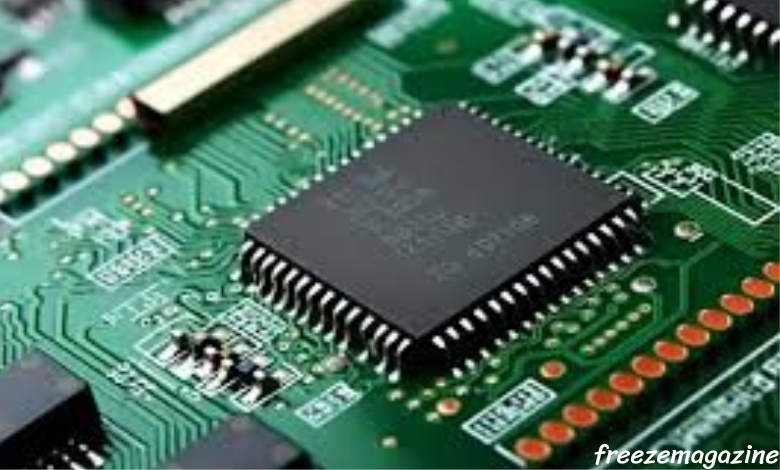
SMT (Surface Mount Technology) is a PCB assembly method in which electronic components are mounted directly onto the surface of a printed circuit board, rather than inserted through drilled holes.
From a manufacturing perspective, SMT meaning includes:
- Solder paste printing onto PCB pads
- Automated pick-and-place of components
- Reflow soldering to form electrical joints
- Optical and electrical inspection
SMT is the dominant assembly method for modern electronics because it supports high component density, automated production, and consistent quality.
How DC Voltage Symbols Translate into SMT Hardware
Every DC voltage symbol in a schematic eventually becomes copper, solder, and silicon on a real PCB.
In an SMT-based design, DC voltage symbols correspond to physical elements such as:
- Power input connectors
- DC-DC converters
- Linear regulators
- Protection diodes
- Bulk and decoupling capacitors
- Power management ICs
Each of these components has strict requirements related to:
- Polarity
- Voltage tolerance
- Orientation
- Thermal behavior
SMT machines will place components exactly as instructed by the placement data—but they cannot correct design intent. If the DC voltage symbol is wrong or ambiguous, the board may be perfectly assembled and still fail electrically.
Power Polarity and SMT Assembly Risks
One of the most common failure modes in SMT production is incorrect polarity.
DC voltage symbols define which side of a circuit is positive and which is negative. That information must be consistent across:
- Schematic symbols
- PCB footprints
- Silkscreen markings
- Assembly drawings
If polarity intent is unclear, the following issues may occur:
- Reverse-mounted diodes
- Damaged electrolytic or tantalum capacitors
- Immediate short circuits at power-up
- Latent reliability failures
Because SMT assembly is automated, such errors are often repeated across entire production batches.
Multiple DC Voltage Domains in Modern Designs
Most modern PCBs do not operate from a single DC voltage. Instead, they contain multiple power domains, such as:
- High-voltage DC input (12V, 24V, 48V)
- Intermediate rails (5V, 9V)
- Logic supplies (3.3V, 1.8V, 1.2V)
- Analog or isolated rails
Each domain must be clearly defined with its own DC voltage symbol and net name.
If symbols are reused incorrectly or voltage domains are not clearly separated, SMT assembly and testing teams may misinterpret the design, leading to:
- Incorrect component population
- Wrong test procedures
- Unsafe power-up conditions
SMT Meaning in Power Integrity and Layout
Understanding SMT meaning goes beyond component placement. It also includes physical limitations that directly affect power behavior.
Examples include:
- SMT capacitors require voltage derating for reliability
- Regulator packages dissipate heat differently depending on orientation
- Grounding depends on copper planes, not schematic symbols alone
- High-current DC paths must be short and wide to reduce losses
If DC voltage symbols do not accurately reflect actual current flow and grounding strategy, the schematic may look correct while the assembled board performs poorly.
Common Manufacturing Issues Linked to DC Voltage Symbols
Many SMT manufacturing problems originate from schematic-level mistakes related to DC voltage symbols:
- Voltage labels that do not match the BOM
- Inconsistent naming between schematic and PCB
- Missing ground references for test points
- Ambiguous power input definitions
- Incorrect assumptions about shared grounds
These issues often escape visual inspection and only appear during functional testing or field operation.
Design for Manufacturability: Aligning Symbols and SMT Reality
Design for Manufacturability (DFM) is the discipline of ensuring that a design can be reliably produced at scale. Clear DC voltage symbols are a core part of DFM.
Best practices include:
- Use explicit DC voltage symbols for every power rail
- Avoid generic or reused power labels
- Clearly distinguish input, output, and regulated rails
- Ensure polarity is obvious for all power-related components
- Align schematic intent with PCB silkscreen and assembly data
When these practices are followed, SMT assembly becomes predictable, testable, and scalable.
From Schematic to Reflow: The Complete Workflow
A simplified modern electronics workflow looks like this:
- DC voltage symbols define power intent
- Schematics connect power to functional blocks
- PCB layout translates symbols into copper
- SMT assembly places and solders components
- Testing verifies voltage stability and polarity
- Production scales to volume
Any misunderstanding of DC voltage symbols early in this chain can compromise every later step.
Testing and Debugging in SMT Power Circuits
During testing, DC voltage symbols serve as reference points.
Test engineers rely on:
- Labeled power rails
- Clear ground definitions
- Consistent voltage naming
If DC voltage symbols are ambiguous, testing becomes slower, error-prone, and more expensive. Clear symbols improve test coverage and reduce time-to-debug.
Reliability and Long-Term Performance
Power-related failures are among the most common causes of long-term reliability issues.
Clear DC voltage symbols help prevent:
- Overvoltage stress
- Thermal overstress
- Incorrect component selection
- Marginal operating conditions
When combined with a solid understanding of SMT meaning, they contribute directly to product longevity.
Why DC Voltage Symbol Knowledge Matters for Engineers
For engineers at all levels, understanding DC voltage symbols is not optional:
- For beginners, it builds correct habits
- For designers, it ensures manufacturable intent
- For manufacturing teams, it reduces interpretation risk
- For quality teams, it improves traceability
Power clarity is a shared responsibility across disciplines.
The Role of SMT Meaning in Scalable Production
SMT meaning becomes even more important as designs scale from prototypes to volume production.
At scale:
- Small schematic errors become large cost drivers
- Rework is expensive or impossible
- Field failures damage reputation
Clear DC voltage symbols reduce ambiguity and support smooth scaling.
Conclusion
The DC voltage symbol and SMT meaning are deeply connected elements of modern electronics engineering.
- DC voltage symbols define power intent at the schematic level
- SMT meaning explains how that intent becomes physical hardware
- Misalignment between the two leads to assembly errors, testing failures, and reliability issues
- Clear power symbols improve yield, quality, and long-term performance
In a world of high-density, automated PCB assembly, power clarity is not just good practice—it is a fundamental requirement for successful electronics manufacturing.