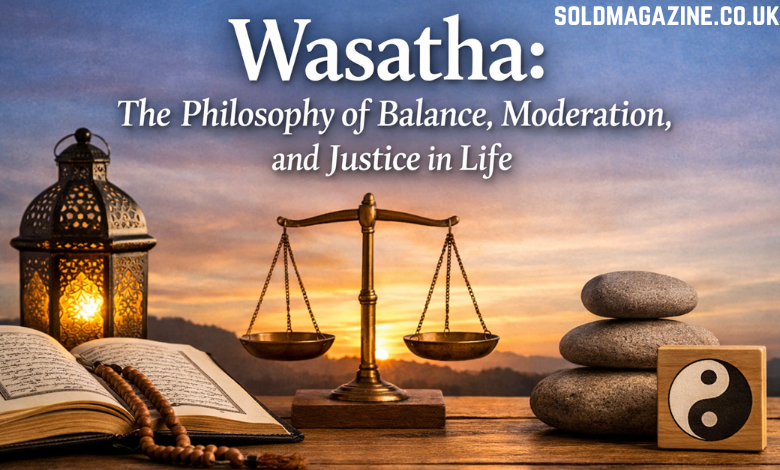
Introduction
In a world where extremes often dominate—be it in opinions, ideologies, or lifestyles—the idea of wasatha offers a powerful and timeless alternative. Rooted in Arabic language, Islamic thought, and broader human philosophy, wasatha represents the values of balance, moderation, and justice. It is a worldview that encourages harmony between opposites and advocates for wisdom in decision-making. This article aims to explore wasatha in depth, focusing on its linguistic origins, philosophical foundations, religious significance, social and political interpretations, and its practical applications in modern life.
What is Wasatha?
The term wasatha comes from the Arabic root wasat (وسط), a word that directly refers to the idea of being in the middle, at the center, or positioned between two points. Linguistically, it refers to something that is equidistant from two ends. This simple spatial meaning, however, evolved over time into a powerful conceptual and ethical principle. Today, wasatha is understood as the pursuit of balance and moderation in all aspects of life, advocating for a middle path between extremes.
It is essential to note that wasatha does not imply indecision or neutrality in the face of injustice. Instead, it is about measured judgment—knowing when to be firm and when to be flexible. It’s the philosophy of avoiding destructive extremes while maintaining moral clarity. Whether applied to individual choices or societal decisions, wasatha is a call to find equilibrium in an increasingly polarized world.
Linguistic and Philosophical Foundations
The foundation of wasatha lies in its Arabic roots. The term’s origin—wasat—suggests balance and centrality. However, its philosophical implications extend beyond mere spatial positioning. Over the centuries, thinkers and scholars have expanded the term’s meaning to encompass ethical, political, and spiritual dimensions.
At its core, wasatha represents a philosophy of moderation that is neither rigid nor excessive. It asks individuals to be mindful of their actions, avoiding both indulgence and deprivation. This middle path is believed to offer the most sustainable and just approach to life. In contrast to positions that favor extremism, wasatha seeks to prevent harm while promoting well-being for all.
Religious Significance of Wasatha
In Islam, wasatha holds a central place, as the religion is often described as one of balance. The Qur’an and the teachings of the Prophet Muhammad (PBUH) stress the importance of moderation in all aspects of life. Islam is presented as a religion that strikes a balance between spiritual devotion and worldly engagement, between individual rights and collective responsibilities, and between mercy and justice.
The Qur’an itself mentions wasatha in several verses, particularly in Surah Al-Baqarah, where it refers to the concept of a “middle nation” or ummatan wasatan (آمّة وسطًا), indicating a balanced and just community. The significance of this principle is reflected in Islamic ethics, which emphasize avoiding extremes in behavior and thought, encouraging Muslims to walk the path of moderation.
Example from the Qur’an:
And in this way, We have established you as a balanced and just community, so that you may stand as witnesses over humanity…” (Qur’an 2:143)
This verse encapsulates the essence of wasatha in the Islamic tradition—striving for justice, balance, and harmony in both individual and collective actions.
The Role of Wasatha in Society
On a societal level, wasatha promotes coexistence, tolerance, and mutual respect. Societies that adopt wasatha as a guiding principle tend to prioritize dialogue over conflict and reform over revolution. This emphasis on balance can be seen in the social structure of many Islamic communities, where cooperation and respect for diverse viewpoints are encouraged.
In terms of governance, wasatha is often linked to centrism—seeking a balanced approach between authoritarian rigidity and unchecked liberalism. Rather than endorsing an extreme political position, wasatha advocates for policies that promote fairness, justice, and inclusivity.
Social Implications of Wasatha
By promoting moderation, wasatha encourages individuals to refrain from over-indulgence in any area of life, whether it’s wealth, power, or personal gratification. It emphasizes collective well-being over individual excess. This ethos contributes to societal stability, as it discourages the polarization that often leads to conflict.
Furthermore, wasatha fosters an environment where diverse opinions can be heard and respected, laying the foundation for peaceful coexistence. The principles of mutual respect and compromise inherent in wasatha offer a path toward resolving societal issues in a manner that benefits all parties.
Wasatha in Politics and Governance
In political discourse, wasatha suggests balanced governance, which avoids extreme forms of rule—be it authoritarian or anarchic. While the term may be associated with political centrism, it goes beyond mere political positioning. Wasatha calls for governance that seeks justice, promotes equality, and ensures the welfare of all citizens, without yielding to the pressures of extreme ideologies.
In practice, political systems that adopt wasatha as a guiding principle may focus on pragmatic solutions rather than ideological purity. This approach allows for policies that prioritize the common good, while avoiding both rigid conservatism and reckless liberalism. Leaders who embody wasatha often work toward social harmony, reducing polarization and fostering unity.
Economic Dimensions of Wasatha
The economic philosophy of wasatha advocates for fairness, sustainability, and responsibility. It dismisses exploitative capitalist excesses on one side while also opposing the shortcomings of ineffective collectivist systems on the other. Instead, it supports an ethical economic system that prioritizes the well-being of both individuals and communities.
Economically, wasatha encourages the fair distribution of resources, with a focus on reducing poverty and inequality. It rejects systems that concentrate wealth in the hands of a few, advocating for policies that support the needs of the majority while encouraging responsible stewardship of resources.
Practical Economic Applications
In the realm of business, wasatha promotes ethical practices that benefit both consumers and producers. This includes rejecting exploitative labor practices and ensuring that businesses operate sustainably, with an emphasis on long-term benefits rather than short-term profit.
Wasatha in Personal Life
On a personal level, wasatha plays a crucial role in mental and emotional well-being. Modern life often pushes individuals toward extremes—overwork, burnout, indulgence, or withdrawal. Wasatha encourages individuals to strike a balance, avoiding extremes and seeking equilibrium in their personal choices.
In terms of health, for example, wasatha suggests maintaining a balanced diet, exercising regularly, and avoiding both over-eating and under-nourishing oneself. Similarly, in relationships, wasatha encourages healthy boundaries—ensuring mutual respect and understanding without being either overly controlling or excessively permissive.
The Application of Wasatha in Modern Life
As modern society grapples with polarization and extremism, wasatha offers a refreshing alternative—a middle ground where wisdom, balance, and moderation prevail. Whether in personal choices, social interactions, or political discourse, wasatha serves as a guiding principle for making fair, just, and thoughtful decisions.
In the digital age, where information and opinions are often extreme and polarizing, adopting wasatha can help individuals navigate through noise and seek rational, balanced perspectives. This practice requires mindfulness, self-awareness, and a commitment to finding harmony in all areas of life.
Misconceptions About Wasatha
One common misconception about wasatha is that it represents indecision or a lack of commitment. However, this view fails to grasp the essence of the philosophy. Wasatha is not about avoiding decisions; it’s about making wise and thoughtful choices, knowing when to be firm and when to remain flexible. It is a practice of balance—not stagnation.
Another misconception is that wasatha implies passivity or neutrality in the face of injustice. In reality, wasatha calls for action based on justice, wisdom, and balance. It encourages individuals to confront injustice but to do so in a measured and thoughtful way, avoiding the destructive outcomes of extremes.
Conclusion
Wasatha is more than just a word—it is a philosophy, a worldview, and a way of life. It reflects humanity’s continual pursuit of equilibrium—seeking truth without inflexibility and advancement without disorder. In an age defined by polarization, wasatha reminds us that the middle path is often the strongest path. In the end, wasatha calls us to embrace moderation, to seek justice without overreaction, and to pursue wisdom in all areas of life. Whether in our personal choices, social interactions, or broader political and economic systems, wasatha offers a blueprint for a balanced, harmonious, and just existence.
FAQS
What is the meaning of wasatha?
Wasatha refers to balance, moderation, and justice, promoting a middle path between extremes in all aspects of life.
How is wasatha related to Islam?
In Islam, wasatha represents a balanced approach to life, promoting justice, harmony, and fairness in both personal and societal matters.
Does wasatha mean indecision?
No, wasatha is about measured judgment—knowing when to be firm and when to show flexibility in decision-making.
What are the societal benefits of wasatha?
Wasatha fosters coexistence, tolerance, dialogue, and mutual respect, leading to peaceful and balanced communities.
How can wasatha be applied in modern life?
Wasatha can be applied in daily life by avoiding extremes, seeking moderation in health, work, relationships, and decision-making.