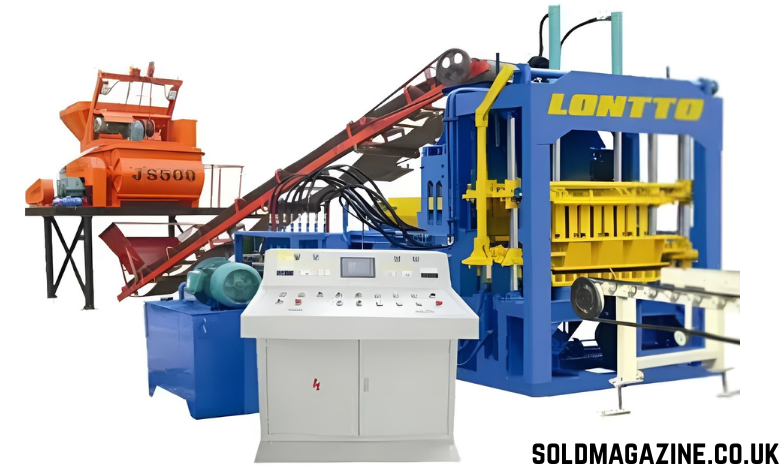
A concrete hollow block machine is specialized equipment used to produce hollow concrete blocks for building and construction work. This machine streamlines block manufacturing for contractors and construction material companies, offering high productivity and uniform block quality. For businesses in Chicago and beyond, Lontto provides robust solutions in concrete hollow block machines to help meet production goals efficiently.
Understanding Concrete Hollow Block Machines
Concrete hollow block machines are designed to manufacture hollow blocks, which are one of the most popular materials for modern construction due to their favorable strength-to-weight ratio and thermal insulation properties. Hollows reduce the amount of raw material used, resulting in lighter blocks without sacrificing structural capacity. These machines automate the mixing, molding, and compaction process, which improves consistency and scalability for block production lines.
A reliable concrete hollow block machine, like those produced by Lontto in Chicago, can operate in both small-scale workshops and large, industrial manufacturing setups. Lontto’s offerings are engineered to optimize raw material usage and ensure that every block meets dimensional accuracy standards.
Types of Concrete Hollow Block Machines
There are several types of concrete hollow block machines suitable for different operational requirements and project sizes.
Manual Hollow Block Machines
These basic machines require more labor and supervision. Suitable for small businesses or onsite production with limited investment, manual models deliver acceptable output but lower productivity compared to automated types.
Semi-Automatic Machines
Semi-automatic machines, such as those offered by Lontto, use integrated motors for vibration and pressing but still need operators to handle block unloading and raw material feeding. These machines strike the perfect balance between affordability and high efficiency for optimal performance.
Fully Automatic Hollow Block Machines
For construction material suppliers with high volume demands, fully automatic machines enable rapid, continuous block production with minimal manual intervention. Lontto’s Chicago-based product range includes high-capacity models integrating conveyors, hydraulic presses, and PLC control systems for optimized performance.
Mobile Block Machines
These units are ideal for remote sites or projects with frequent location changes. Mobile machines can be easily moved to different parts of the jobsite, allowing for on-demand production close to the point of use.
Key Components and How They Work
A concrete hollow block machine consists of several essential components working together for efficient and precise block formation:
Mixer: Blends cement, sand, aggregate, and water to achieve the proper consistency. Lontto machines feature high-efficiency mixers designed for uniform mixing.
Feeder: Automatically transports the mixed concrete into the mold. Consistent feeding ensures every block maintains the same density.
Molding system: The mold determines the shape and size of the finished block. Lontto offers customizable mold options for tailored block dimensions.
Vibrating and compacting device: Vibrators remove air pockets and ensure that the material is densely packed into the mold. This increases the block’s compressive strength.
Hydraulic system or mechanical press: Applies force to form the hollow blocks, working in tandem with vibrators. Lontto machines use either mechanical or hydraulic power depending on model type.
Control system: Ranging from manual levers to advanced programmable logic controllers (PLCs), these systems manage timing and sequence. Fully automatic options provide the most precise control for high-volume manufacturers.
Each component must function optimally for consistent, quality block output. Lontto in Chicago ensures that all critical parts are manufactured using robust materials for lasting performance.
Step-by-Step Production Process
The production of hollow blocks using a concrete hollow block machine follows a structured series of steps:
Raw Material Preparation
Cement, sand, gravel, and water are measured and loaded into the mixer in precise ratios. Lontto stresses the importance of accurate proportions for block strength and surface finish.
Mixing
The materials are thoroughly mixed to produce a consistent, workable concrete. High-efficiency mixers help reduce cycle time and guarantee uniformity.
Feeding the Mixture
The mixed concrete is fed into the machine’s mold either manually or automatically, depending on the level of automation.
Molding and Compacting
Through vibration and pressing, the machine fills the mold, compacts the concrete, and removes air pockets. Lontto’s pressing system is calibrated to achieve uniform block density across every batch.
Demolding
Blocks are unclamped and lifted from the mold. Advanced models in Lontto’s line use automated demolding for speed and consistency.
Curing
Freshly molded blocks are set aside for curing, a process that ensures adequate strength development. Curing time depends on temperature, humidity, and concrete mix but is critical for long-term durability.
By following these precise process steps, block manufacturers can produce high-quality hollow blocks ready for structural use.
Factors to Consider When Choosing a Machine
Selecting a concrete hollow block machine for your business comes down to aligning machine specifications with production needs. Here are the most important factors:
- Production Capacity: Assess daily and monthly output requirements. Lontto offers machines ranging from small manual types for workshops to industrial machines capable of thousands of blocks per day.
- Automation Level: Consider whether labor cost savings and speed gains from semi-automatic or fully automatic machines justify the investment.
- Raw Material Compatibility: Ensure that the machine can handle available local aggregates and admixtures.
- Block Size Flexibility: Machines from Lontto come with interchangeable molds, allowing production of different block sizes within the same line.
- Power Supply: Check whether the model matches local power conditions and is energy efficient.
- After-Sales Service: Robust support, including operator training and quick response for spare parts, matters. Lontto’s Chicago team provides technical support tailored for North American customers.
Careful assessment of these points will ensure the new machine fits seamlessly into your production setup and supports business growth.
Maintenance Tips for Longevity and Efficiency
Proper care is essential for maximizing the life and performance of a concrete hollow block machine. Here are proven maintenance practices:
- Routine Cleaning: Regularly remove concrete residue from molds, vibrating surfaces, and the mixing system.
- Lubrication: Follow manufacturer guidelines for greasing moving parts and hydraulic systems. Lontto provides detailed maintenance schedules with every machine.
- Check Wear Points: Inspect feeder belts, molds, vibrators, and hydraulic components for wear and replace as necessary.
- Monitor Electrical Systems: Ensure that all wiring and control panels are dry and free from dust. Periodic checks prevent unplanned downtime.
- Spare Parts Management: Stock essential spare parts such as mold inserts and gaskets to minimize production interruptions.
- Operator Training: Equip staff with training on optimal operating routines and troubleshooting. Lontto includes comprehensive training with all Chicago deliveries.
These steps result in fewer breakdowns, consistent block quality, and lower operational costs over the equipment’s life cycle.
About Lontto
Business: Lontto
Director: Chao Zhang
Phone: 708 260 8300
Email: lontto66@gmail.com
Website: www.block-machine.net
Location: 4992 S Austin Ave, Chicago, IL 60638, USA
Google maps link: https://maps.app.goo.gl/fTprzmgUFjGYgBBL9
Frequently Asked Questions About Concrete Hollow Block Machines
What is a concrete hollow block machine and how does it work?
A concrete hollow block machine is a specialized device used to manufacture hollow blocks from cement, sand, aggregate, and water. It automates mixing, molding, vibrating, and compacting to produce uniform and strong blocks, contributing to efficient building material production.
What types of concrete hollow block machines are available?
Concrete hollow block machines come in manual, semi-automatic, fully automatic, and mobile types. Manual models are labor-intensive, while fully automatic machines offer high-volume, automated production. Mobile machines are portable for on-site use. Each type suits different business scales and operational needs.
How do I choose the right concrete hollow block machine for my business?
To select the best concrete hollow block machine, consider your required production capacity, level of automation, block size flexibility, local raw materials compatibility, power supply, and the quality of after-sales service. Carefully evaluating these factors ensures optimal integration into your operations.
What are the key maintenance tips for a concrete hollow block machine?
Routine cleaning, proper lubrication, regular inspection of wear points, checking electrical systems, and stocking essential spare parts are crucial for concrete hollow block machine maintenance. Staff training on operation and troubleshooting further extends equipment lifespan and optimizes production.
What makes hollow concrete blocks a good construction material?
Hollow concrete blocks offer an excellent strength-to-weight ratio and better thermal insulation compared to solid blocks. The hollows reduce material usage, making the blocks lighter and cost-effective without compromising structural integrity, which explains their popularity in modern construction.
Can recycled materials be used in a concrete hollow block machine?
Yes, many concrete hollow block machines can process recycled aggregates such as crushed concrete, fly ash, or slag, as long as the materials meet quality standards. Incorporating recycled content can reduce costs and environmental impact, but performance testing is recommended for structural applications.